



I saw the headline and had the same reaction most developers probably had this week: okay, that is either a real shift or a very online way to waste my attention.
The headline was clean enough to spread on its own. Kimi K2.6, Moonshot AI’s open-weights model, reportedly beat GPT-5.5, Claude, Gemini, and Grok in a public coding challenge round that started making the rounds on May 2 and May 3, 2026. That is exactly the kind of sentence that gets pasted into group chats with zero context and way too much confidence.
What made me stop and look harder is that this was not coming out of nowhere. Moonshot officially launched Kimi K2.6 on April 20, 2026. Artificial Analysis put it at the top of the open-weights pack on April 21. Microsoft added it to Foundry on April 22. So the viral challenge win did not create the story. It just gave the story a much sharper hook.
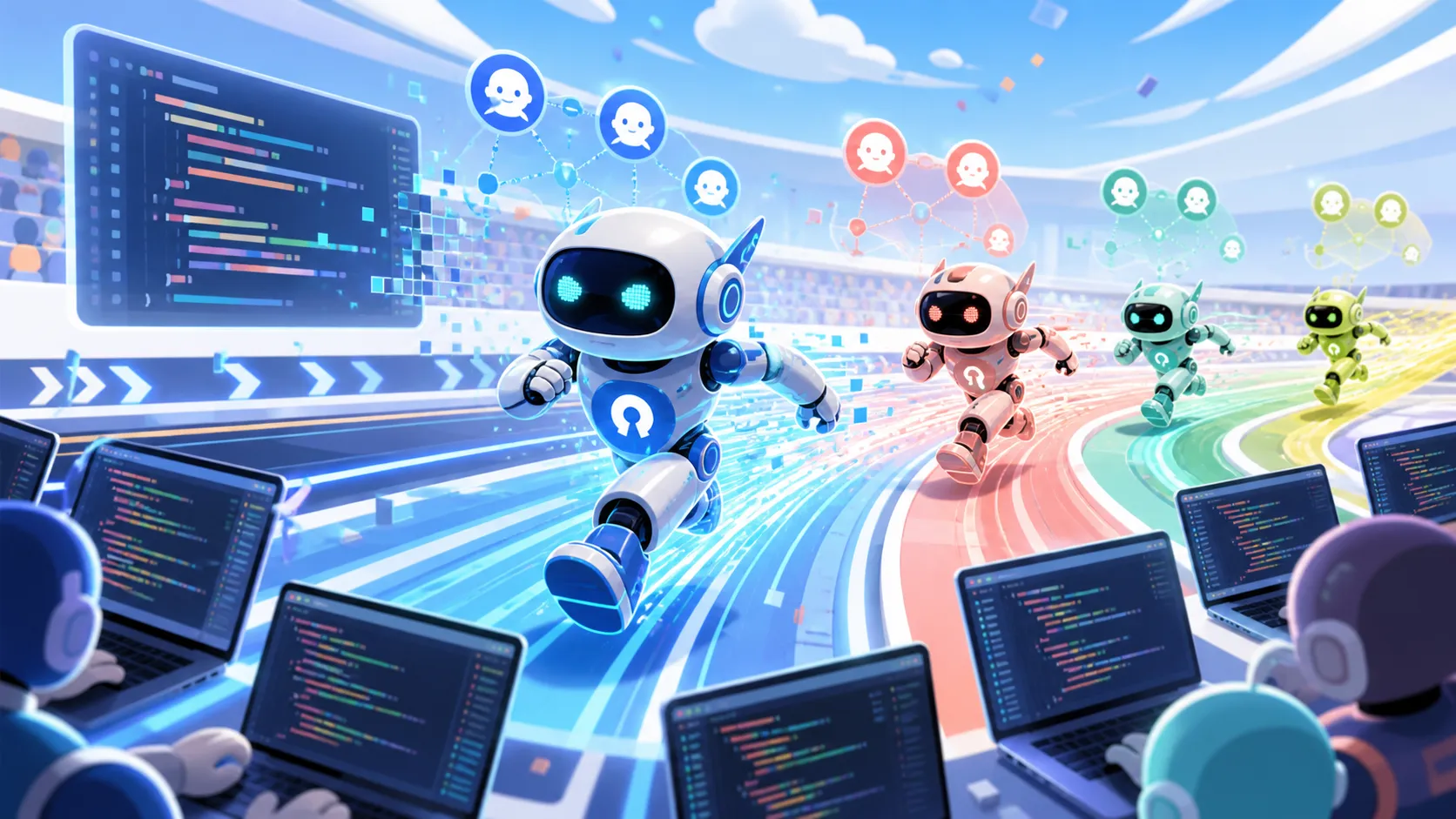
What I care about here is not the dopamine hit of “new model beats old model.” We have way too much of that already. The better question is whether Kimi K2.6 has actually crossed the line from “interesting open model” to “serious default candidate for real coding work.”
Why This Blew Up Again
The official launch was not the real spike
Kimi K2.6 was already live before the current noise cycle. That matters. This was not some mystery leak or one benchmark chart with no product behind it. Moonshot had already published the model, documented the pitch, and started pushing a story around long-horizon coding, multimodal inputs, tool use, and agent swarms. Microsoft had already put it into Foundry. Third-party benchmark watchers had already taken it seriously.
But none of that is what made people suddenly talk about it again.
What pulled it back into the feed was the much simpler claim that it won a viral coding contest round against the models developers normally assume sit above everything else. That kind of story travels faster than any careful benchmark article because it compresses a whole market shift into one emotional sentence: wait, the open model might actually be catching up.
The story lands on three nerves at once
This is why the topic has so much traction right now.
First, it is an open-weights story. Developers love anything that hints the expensive closed-model hierarchy is not permanent.
Second, it is a coding story, not a vague “general intelligence” story. That makes it immediately useful to people choosing tools this month, not five years from now.
Third, it comes with a cost angle. Microsoft’s Foundry listing shows Kimi K2.6 at $0.95 per million input tokens and $4 per million output tokens. The second a model looks good enough for agent loops and cheap enough to run aggressively, people stop treating it like a science project.
That combination is nasty in the best way. Open. Good enough. Cheaper. That is how a model gets onto real shortlists fast.
| Signal | What it tells me | Why it matters |
|---|---|---|
| Moonshot official release | There is a real product behind the chatter | This is not just benchmark cosplay |
| Artificial Analysis ranking | Kimi is not winning on vibes alone | Open weights are closing the gap |
| Microsoft Foundry support | Enterprises can test it quickly | Distribution changes adoption speed |
| Viral contest thread | Developers suddenly remember the name | Social proof moves faster than papers |
What Moonshot Actually Shipped
This is not a cute side model
Moonshot’s own Kimi K2.6 blog is not pitching a lightweight chatbot that happens to write decent code. It is pitching a model for long-horizon coding, extended tool use, and multi-agent workflows. The official claims are ambitious: 1 trillion total parameters, 32 billion active parameters, 256K context, multimodal input, and long-running engineering sessions that span thousands of tool calls.
Vendor blogs always deserve a little side-eye. I do not think that is controversial anymore. But I also do not think you can dismiss this one as pure marketing fluff. When a lab spends its time emphasizing 12-hour runs, thousand-call sessions, and architecture-level optimization tasks, it is telling you exactly where it wants to be judged.
Not on autocomplete. Not on toy snippets. On whether the model can keep its head straight when the job gets messy.
If you have been following my multi-agent orchestration guide, this part should look familiar. The interesting change is not that one more model can write code. The interesting change is that model vendors are now openly optimizing for delegated, multi-step, tool-heavy loops as the main event.
Third party numbers make it harder to shrug off
Artificial Analysis gave Kimi K2.6 a much more useful kind of validation on April 21, 2026. It called the model the new leading open-weights model and placed it at number four on its Intelligence Index, behind Anthropic, Google, and OpenAI. That is not the same as “best model overall.” But it is a very real status jump.
It moves Kimi K2.6 out of the “cheap backup option” bucket and into the “you should benchmark this against your current default” bucket.
Microsoft adding the model to Foundry one day later matters for a different reason. Availability is credibility. Once a model is easy to run inside mainstream infrastructure, more teams will actually evaluate it instead of vaguely promising to test it later and then forgetting for three weeks.
I also think the pricing line matters more than people admit. A frontier-adjacent model with lower token costs changes how people think about background agents, longer sessions, and more aggressive experimentation. The raw capability question is only half the decision. The other half is whether you can afford to let the thing work for a while without feeling every minute in your bill.
Why The Viral Win Needs A Footnote
One contest win is still one contest win
This is the part I wish more people would say out loud.
The viral claim is about a specific contest task, not a universal declaration that Kimi K2.6 is now the uncontested king of coding models. Those are wildly different statements. I am not calling the contest result fake. I am saying the leap from “won this round” to “replace your entire stack tomorrow” is exactly where developers start embarrassing themselves.
Contest tasks can be valuable. They show speed, adaptability, short-horizon reasoning, and whether a model can stay composed under a tight loop. I care about all of that. But a public challenge still captures only part of the job. It does not automatically tell you how the model behaves after 45 minutes in a weird repo, when the instructions are inconsistent, the tests are flaky, and the best fix is annoying rather than clever.
That is why I trust the combined signal more than the trophy line by itself.
| Signal | Source type | What I would trust it for |
|---|---|---|
| Moonshot launch post | Official vendor source | Product scope, architecture claims, access paths |
| Artificial Analysis evals | Third-party benchmark source | Relative capability and tradeoffs |
| Microsoft Foundry launch | Major platform source | Distribution readiness and pricing |
| Viral contest chatter | Community signal | What developers will try next week |
The bigger story is the shortlist
Honestly, the reason this blew up is not that one more chart changed. It is that the shortlist for serious coding models keeps getting less comfortable.
A few months ago the market story was cleaner. Closed models were on top. Open models were interesting, often impressive, sometimes cheap, but still usually framed as the compromise option. Kimi K2.6 does not completely erase that hierarchy. What it does is make the old hierarchy harder to say with a straight face.
That is a real shift.
Once an open model gets close enough on coding quality, cost and flexibility start to matter more. One engineer gets a strong result on a repo task. Another notices the price curve. A third sees that the model was designed for agent workflows instead of one-shot chat answers. Suddenly the model is on every internal evaluation sheet, even if nobody fully trusts it yet.
That is how adoption really happens. Not with one glorious launch event. With a bunch of skeptical developers muttering, “fine, I guess I have to test this too.”
Where I Think Kimi K2 6 Is Actually Dangerous
It looks perfect for long running cost sensitive agent work
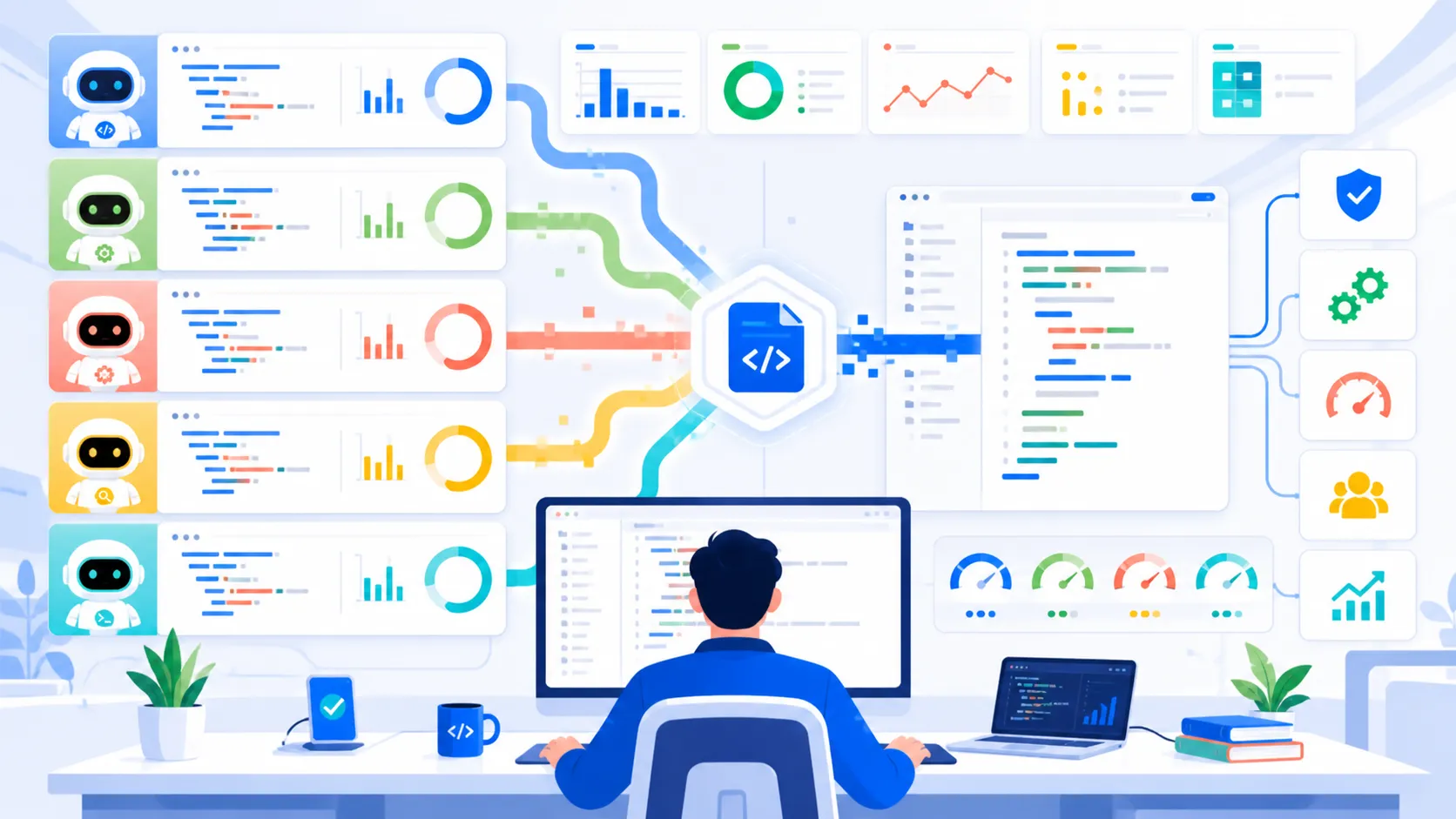
If I were building an agent stack that needs to stay busy for a long time without turning cost control into a joke, Kimi K2.6 would be hard to ignore right now. Open weights help. Lower pricing helps. The public positioning around long-horizon execution and sub-agent coordination lines up with the direction most coding tools are already moving anyway.
This is the exact lane where “pretty good plus cheap plus open” can become more disruptive than “best on one benchmark.” Once a model is competent enough to survive real workflows, budget and deployability start hitting much harder than prestige.
That is why the current hype does not feel random to me. Developers are tired of choosing between premium closed models for every task and obviously weaker cheap models for everything else. Kimi K2.6 is landing right in that gap.
I still would not trust the victory lap without boring checks
At the same time, I would not hand this model a giant codebase and start celebrating because it won a viral test. That is not cynicism. That is just memory. Every new coding model gets a honeymoon week where people mostly test happy paths. The second week is where the weird failures start showing up.
So if you are tempted to move fast here, I would do it with a very boring evaluation harness:
# Use your own repo tasks instead of somebody else's viral benchmark
# 1. pick 10 real bugfixes
# 2. pick 5 refactors
# 3. pick 5 review tasks
# 4. compare cost, latency, and test pass rate
That is less fun than reposting the contest result. It is also how you learn whether a model is actually useful to your team.
The other thing I would watch closely is token behavior. Artificial Analysis noted that Kimi K2.6 uses a lot of tokens even while scoring well. That does not break the story, but it does complicate the pricing excitement. Cheap per token and cheap per solved task are not always the same thing.
So Would I Put It On The Front Line
For evaluation yes for blind trust no
My short version is simple. Kimi K2.6 has crossed the line where ignoring it looks lazy. The model has enough official backing, enough third-party validation, and now enough same-week social momentum that it belongs in any serious coding-model bakeoff.
What does not feel settled yet is whether this viral win translates into better day-to-day engineering outcomes than GPT-5.5, Claude, or Gemini on your actual stack. Maybe it will. Maybe it will mostly win the cost-performance argument instead of the raw-quality argument. Either way, that still matters a lot.
I think that is why the story spread so fast this week. It compresses a much larger anxiety into one clean question: what if the open model everyone treated as almost there is now close enough that the old default choices start looking overpriced?
That is an extremely clickable question. It is also a real one.
If you want the surrounding infrastructure context after this, go back to my MCP guide. The next phase is not just model wars. It is which models can survive tool calls, memory pressure, and messy repo reality without falling apart halfway through the job.