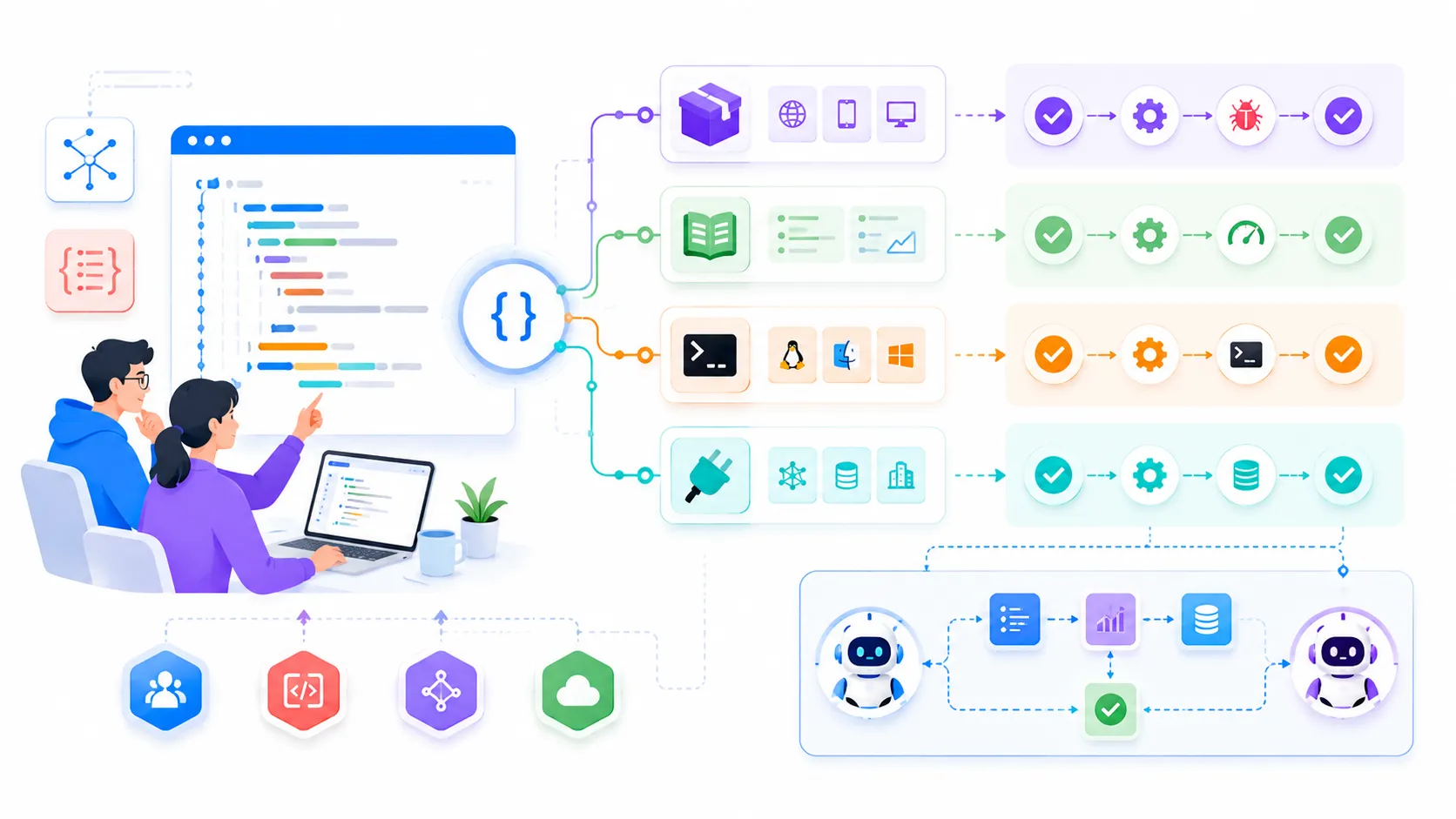


Anthropic Stainless acquisition is one of those developer-tooling stories that looks small until you notice where the leverage is.
It is not a model launch. It is not another leaderboard screenshot. It is Anthropic buying Stainless, the company that turns API specs into SDKs, CLIs, docs, and MCP servers. That sounds like plumbing. Honestly, it is plumbing. But it is the kind of plumbing every agent company suddenly needs if their bots are supposed to do useful work outside a chat box.
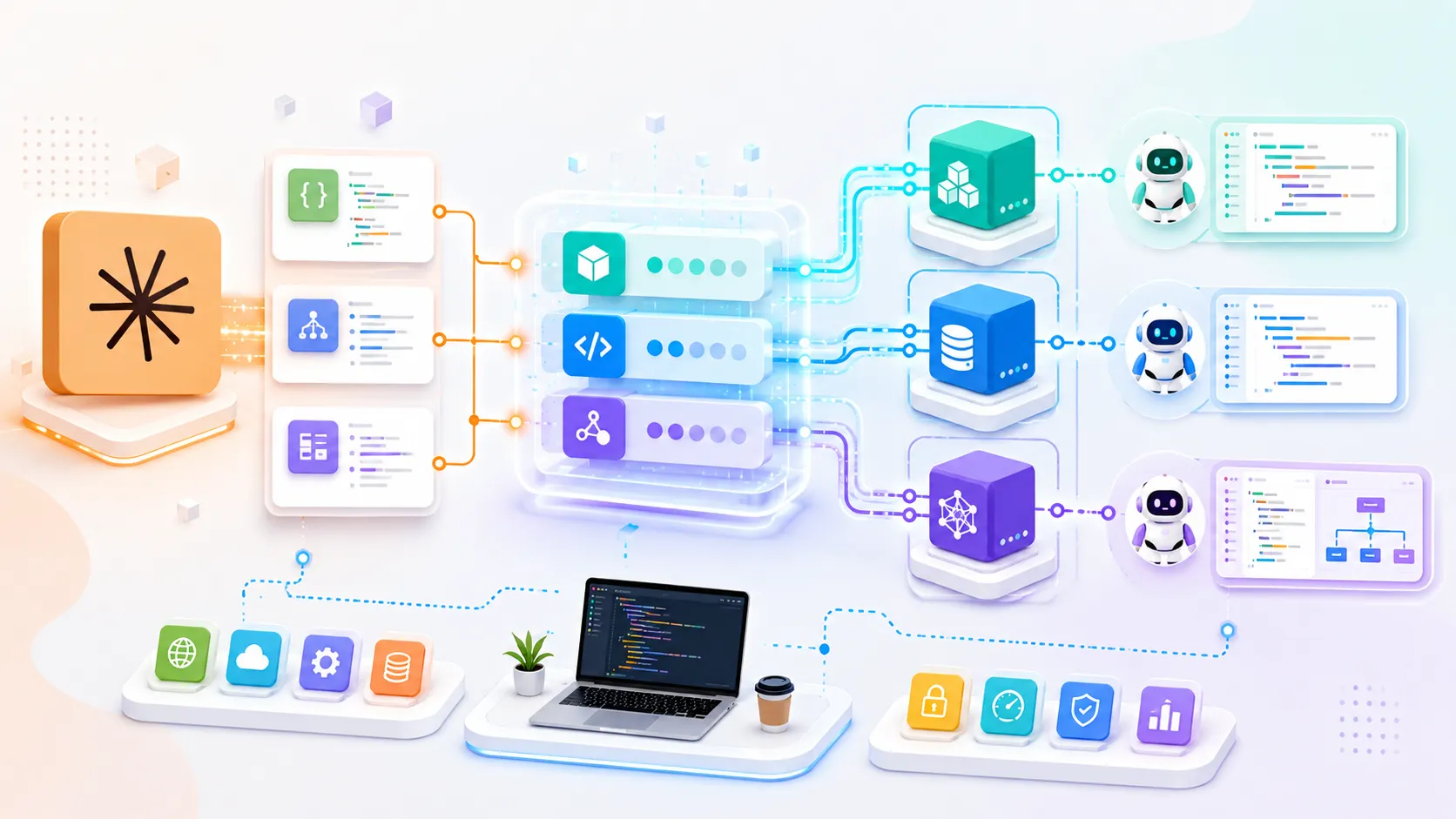
The spicy part is not only that Anthropic gets the Stainless team. The spicy part is that Stainless says it is winding down all hosted products, including the SDK generator. TechCrunch reported the same thing, with the extra sting that Stainless was used by rival AI labs and developer platforms, including OpenAI, Google, Replicate, Runway, and Cloudflare.
So yeah. The SDK layer just got political.
Why Anthropic Wanted The SDK Layer
Agents need boring interfaces more than clever demos
Anthropic’s official announcement frames the deal around a simple idea: AI is moving from models that answer to agents that act. That is the right lens. An agent is only useful if it can safely and predictably reach external systems. Payment APIs. Databases. CRMs. CI systems. Internal admin tools. Ticket queues. Cloud services.
The model can be brilliant and still useless if the interface layer is brittle.
This is why Stainless matters. It takes an API spec and produces SDKs across languages like TypeScript, Python, Go, Java, and Kotlin. The product was not just “generate a wrapper once.” The value was ongoing maintenance as APIs changed. Anyone who has maintained hand-written clients knows how fast that turns into a sad little graveyard of deprecated params, broken examples, and version drift.
For normal developers, that drift is annoying.
For agents, it is worse. Agents will hammer interfaces at machine speed. They will chain calls. They will recover from errors badly if error shapes are inconsistent. They will hallucinate method names if the SDK and docs lag the API. They will try old examples if those examples are still indexed somewhere.
If you are Anthropic, owning this layer means Claude can be trained, evaluated, documented, and integrated against a tighter tool surface. That is a real advantage, even if it does not show up as a benchmark number.
MCP makes this less optional
The deal also sits right next to MCP. Stainless has been building MCP server tooling, and Anthropic created MCP as the connection layer for agents. Put those together and the shape is obvious: APIs are no longer just for human developers writing code. APIs are the surface area agents use to act.
That changes the standard for developer experience.
Five years ago, a mediocre SDK meant a frustrated developer opened the docs and wrote a workaround. In 2026, a mediocre SDK can mean an agent fails silently, opens a bad pull request, leaks context into the wrong system, or gets blocked by a vague 400 error that nobody routed into the reasoning loop properly.
I keep thinking about the MCP guide I wrote earlier. Back then, MCP felt like a clean protocol story. Now it feels more like a distribution story. Whoever makes it easiest for agents to connect to real tools gets to shape the default workflow.
And defaults matter.
The Competitive Move Is Hard To Ignore
Stainless is not staying neutral
The official Anthropic post is polite. The Stainless post is warm. Both talk about developer experience, craft, and better agent connectivity. I believe that part.
But the market effect is still sharp.
Stainless says new signups, projects, and SDKs are no longer available. Existing customers keep the SDKs they already generated and can modify them. That is fair as an ownership statement, but it does not remove the operational problem. If your company depended on hosted Stainless to keep SDKs fresh as APIs changed, you now need a migration path.
That is especially awkward because the customer list was not tiny. Stainless itself lists names like Cloudflare, OpenAI, Replicate, Mux, Weights and Biases, and others on its site. TechCrunch reported that the tool will only be available to Anthropic going forward.
That is not just an acquisition. That is a supplier disappearing from a shared part of the AI developer stack.
I do not mean “evil.” I mean strategic.
| Layer | Why it matters now |
|---|---|
| SDK generation | Agents need reliable language-native calls |
| CLI generation | Developers and agents both automate through shells |
| Docs consistency | Examples become model training and retrieval fuel |
| MCP tooling | Agent integrations need predictable connector surfaces |
If you are competing with Claude, this probably ruins a few roadmaps.
The price tag is not the main story
The Information reportedly had Anthropic in talks to buy Stainless for more than 300 million dollars before the official announcement. That number is big, but I think the more interesting part is where the money is going.
AI labs used to compete mostly on model quality. Then they competed on context windows, coding features, enterprise controls, connectors, and agent runtimes. Now they are buying the rails under the developer experience.
That should make every infrastructure team a little more alert.
When a neutral tool becomes part of a model vendor, the risk model changes. You do not have to panic. You do have to ask better questions.
dependency review:
- Do we rely on hosted generation for SDKs or docs?
- Can we regenerate clients without a vendor console?
- Are our OpenAPI specs complete enough to rebuild from?
- Do agents depend on examples that only existed in hosted docs?
- Can we test generated clients against production-like fixtures?
This is not glamorous work. It is exactly the kind of boring work that saves you when a vendor email says “transition plan.”
What Developers Should Actually Do
Audit the generated stuff before it becomes archaeology
The first move is not rage-posting. The first move is inventory.
Find every generated SDK, docs site, client package, MCP server, and CLI your team depends on. Then answer the painful question: could you recreate this from source inputs today?
If the answer is no, fix that before the next migration panic.
Generated code creates a weird comfort problem. Because nobody hand-wrote it, nobody feels like they own it. But your users do not care whether a broken Python client was handcrafted or produced by a beautiful generator. It is still your API surface.
So treat generated clients as product code. Version them. Test them. Keep fixtures. Validate examples. Run smoke tests against real auth flows. Make sure the generated docs are not the only place where the integration contract lives.
OpenAPI quality just became an agent strategy
Here is the unsexy take: your OpenAPI spec is now part of your agent strategy.
If the spec is vague, generated clients will be vague. If examples are stale, generated docs will be stale. If auth flows are weirdly documented in prose outside the spec, agents will miss them. If error responses are not modeled cleanly, agents will recover badly.
The better your API contract is, the less dependent you are on any one hosted generator.
That does not mean every team should build its own Stainless clone. Please do not do that unless you have the scale and patience. It means the source of truth should live in your repo, not only inside a vendor product. It means regeneration should be scriptable. It means a failed generator should be annoying, not existential.
For AI companies, the bar is even higher. If your product promise is “agents can connect to anything,” your own connection layer has to be boringly excellent. That is probably why Anthropic bought Stainless instead of trying to duct-tape this together later.
The Boring Move After The Spicy One
Own the contract even when you outsource the generator
My read is pretty simple: Anthropic did not buy a random dev tool. It bought a compounding advantage in the part of AI infrastructure where agents touch the real world.
That does not make Claude unbeatable. It does make the agent race less abstract. The next advantage may not come from a smarter answer. It may come from a cleaner SDK, a better MCP server, a docs page the model can actually use, and an integration path that does not break when the API changes on a Friday.
For the rest of us, the lesson is less dramatic but more useful.
Do not let generated infrastructure become invisible. The more AI agents use your APIs, the more that invisible layer becomes your actual product. Keep the specs clean. Keep the generated clients reproducible. Keep the examples honest. And when a vendor owns a piece of your delivery path, make sure you can still ship if that path closes.
That is the uncomfortable part of the Anthropic Stainless acquisition.
It is not just about who owns one SDK generator. It is about who owns the defaults agents will trust when they start acting on our behalf.