



Copy Fail is the kind of Linux vulnerability that makes every security Slack channel suddenly sound less theoretical.
The bug itself is bad enough. CVE-2026-31431 is a local privilege escalation in the Linux kernel’s algif_aead path, and the public writeups describe a reliable path from an unprivileged local user to root on mainstream distributions. The Xint research post says the issue has been reachable in major Linux kernels since a 2017 optimization. NVD now links it to CISA’s Known Exploited Vulnerabilities catalog, with a mitigation deadline attached for U.S. federal agencies.
But the part that really stuck with me is not just “patch Linux again.” We do that all the time. The weird part is that this one arrived with AI-assisted discovery, a very public proof-of-concept, messy disclosure discourse, and immediate pressure on Kubernetes nodes, shared hosts, and CI runners. That is a lot of blast radius packed into one kernel bug.
I do not think Copy Fail means AI can replace good vulnerability researchers. That take is too lazy. I do think it means the patch economy just got less comfortable.
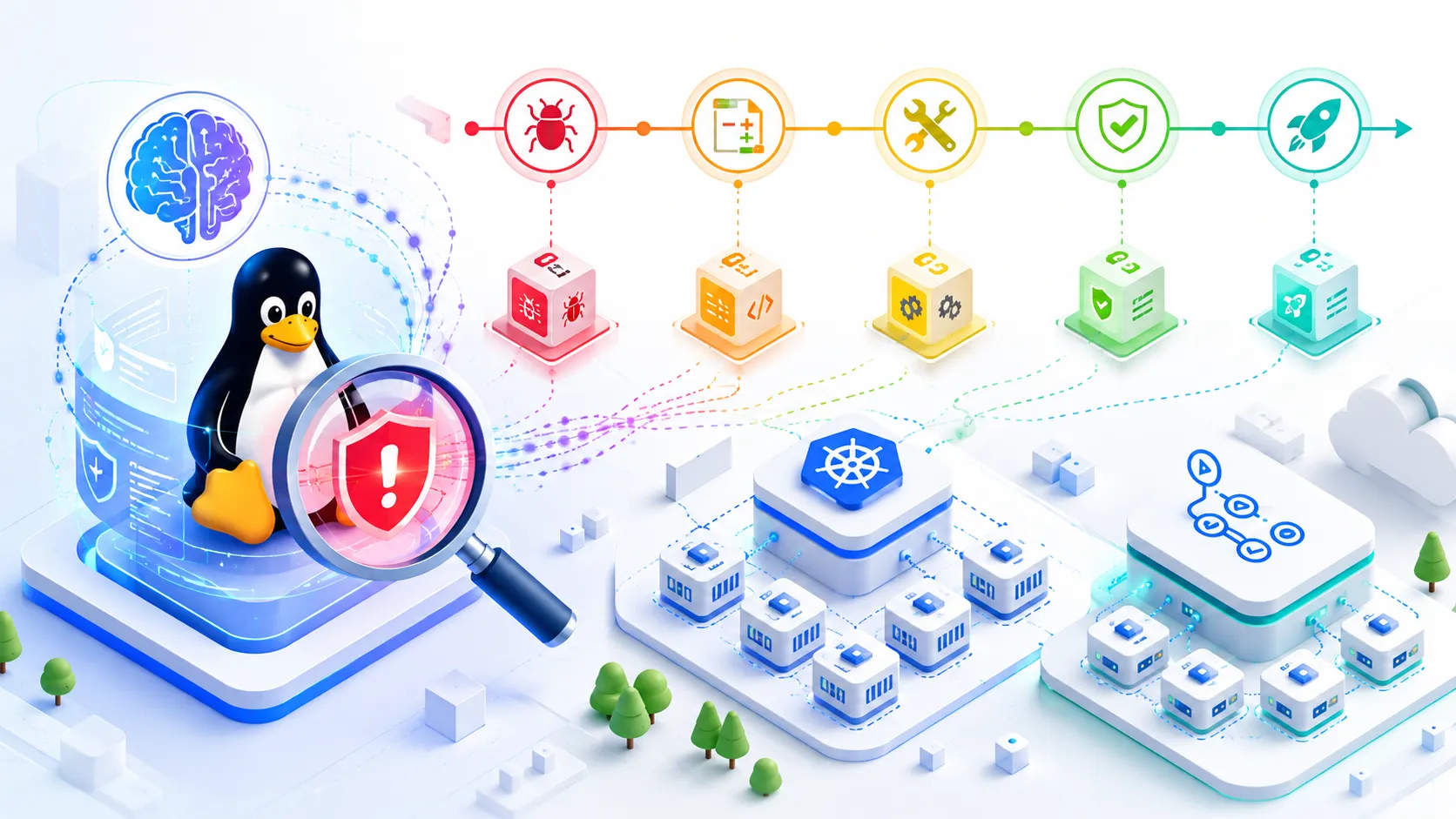
Copy Fail Is A Patch Timing Problem
The bug is local, but the risk is not small
The first thing I would say in a team chat is boring and important: local privilege escalation is still serious.
Yes, an attacker usually needs a foothold first. That can make people relax too quickly. In real systems, local footholds are everywhere: compromised web apps, abused plugin uploaders, malicious dependency scripts, poisoned CI jobs, overly broad SSH access, weakly isolated notebooks, internal build boxes, and shared developer sandboxes. Once code is running as a low-privilege user, a kernel LPE changes the conversation.
CyberScoop’s report frames the tension well. Copy Fail is technically real and operationally serious, but the disclosure was wrapped in enough AI-generated noise that teams had to spend extra time separating signal from theater. That is exactly the new failure mode I am worried about. When the exploit is real and the marketing is loud, responders lose time doing interpretation work.
The technical shape is nasty because it touches page cache behavior. CERT-EU’s advisory describes a controlled four-byte write through the Linux kernel’s AF_ALG userspace crypto interface and explicitly tells teams to prioritize Kubernetes nodes and CI/CD runners. That matches my instinct. Shared-kernel environments are where “local” stops feeling local.
Kubernetes and CI make local bugs feel remote
The scary path is not a developer running a random exploit on their laptop, although that is still bad. The scarier path is a workload boundary that was supposed to be boring.
Think about CI. A pull request from an external contributor kicks off tests. The runner executes dependency installation, test scripts, build steps, maybe a containerized integration test. If that environment shares a vulnerable host kernel and has secrets nearby, an LPE becomes part of your supply-chain threat model. Not because the kernel bug magically steals your deploy key by itself, but because it may turn a constrained build job into a host-level incident.
The same thing applies to Kubernetes. If untrusted or semi-trusted pods share a vulnerable node, host isolation becomes the real question. Namespaces and cgroups do useful work, but they are not a hardware boundary. Dark Reading called out CI runners and Kubernetes clusters as practical risk zones, and that feels more useful than arguing whether the vulnerability is “only local.”
This is also why I keep thinking about the Next JS security patch mess from earlier today. Different stack, same pattern. Modern developer systems have many paths that look separate in the diagram but collapse together during an incident. Middleware is not the whole policy. Containers are not the whole boundary. CI is not just automation. These are production trust surfaces.
AI Vulnerability Discovery Changes The Queue
The uncomfortable part is the discovery speed
The Xint post says a human researcher supplied the key insight, then used AI to scale the search across the Linux crypto subsystem. That distinction matters. This was not “press button, receive root bug.” It was closer to a strong researcher turning a very specific suspicion into a faster search loop.
That is still a big deal.
Most organizations built their vulnerability response around scarcity. There are only so many kernel researchers. Only so many people can stare at scatterlists, page cache behavior, syscall reachability, and container boundaries without losing the plot. If AI tools help those people search faster, the number of serious findings does not need to explode by 100x to change operations. Even a modest increase breaks old assumptions.
The old rhythm was something like this:
| Old Assumption | Copy Fail Reminder |
|---|---|
| Deep kernel bugs are rare enough to triage slowly | AI-assisted research can shorten discovery loops |
| Local bugs can wait behind remote bugs | Shared runners and cluster nodes make local bugs operationally urgent |
| Disclosure pages are mostly technical artifacts | AI-generated disclosure copy can muddy the response |
I am not saying every AI-found vulnerability will be good. A lot of it will be noisy. Some reports will be wrong. Some PoCs will be low-effort clones. CyberScoop noted that additional proof-of-concept variants appeared quickly after disclosure, many apparently just repackaging the same idea. That is annoying, but it is also part of the point. The cost of generating “security-looking output” has dropped too.
Your intake process needs a spam filter and a panic button
The response pattern has to change a little.
Security teams need to be able to dismiss junk fast, but they also need a path for “this looks noisy and still might be real.” Copy Fail sits right there. Some of the presentation was easy to criticize. The underlying issue was still serious enough for vendor trackers, NVD references, CISA KEV, and government advisories.
That means the intake process cannot rely on tone. A polished advisory can be wrong. A messy advisory can be right. An AI-written page can contain a real exploit. A famous source can still overstate impact. The only durable move is evidence-based triage: affected component, exploit preconditions, boundary crossed, patch or mitigation status, and whether public exploitation is plausible or confirmed.
For developers, the practical version is simple: stop treating vulnerability disclosure as someone else’s paperwork. If your product runs code from users, contributors, customers, plugins, extensions, notebooks, or agents, then kernel and runtime advisories are part of your app’s threat model.
What I Would Check Today
Start with systems that execute other people’s code
I would not begin with every Linux server equally. I would start with the places where untrusted code touches a shared kernel.
That means Kubernetes worker nodes first, especially mixed-trust clusters. Then CI runners. Then hosted build machines. Then developer sandboxes. Then notebook platforms. Then shared bastions and legacy boxes where “temporary access” became permanent three years ago.
For Ubuntu specifically, the Ubuntu CVE tracker marks the issue High and points to mitigation guidance. Bugcrowd’s analysis also lays out a useful priority split: shared-kernel multi-tenant environments deserve faster treatment than dedicated hosts with tighter access.
Here is the kind of inventory pass I would run before trying to be clever:
uname -r
find /etc/modprobe.d -type f -maxdepth 1 -print
grep -R "algif_aead" /etc/modprobe.d /etc/modules-load.d 2>/dev/null || true
systemctl list-units --type=service --state=running | rg "runner|build|kube|container|docker|podman"
That does not prove safety. It gives you a starting map. The actual decision still depends on your distro, kernel package status, whether AF_ALG is reachable in your workload profile, and whether your isolation boundary is shared-kernel or VM-grade.
Patch management needs smaller blast zones
The deeper lesson is not “block one kernel module and go back to sleep.” The deeper lesson is that shared execution environments need smaller blast zones.
For CI, I would rather pay more for ephemeral VM-backed runners than keep pretending a long-lived shared runner is basically fine. For Kubernetes, I would separate untrusted jobs from core service nodes. For internal automation, I would make sure credentials available to build processes are scoped like they are already compromised, because one day the isolation layer will be the weak link.
That sounds expensive until you compare it with an incident where a test job turns into host access and deployment credentials are sitting in the environment. Then the “expensive” version starts looking like normal engineering.
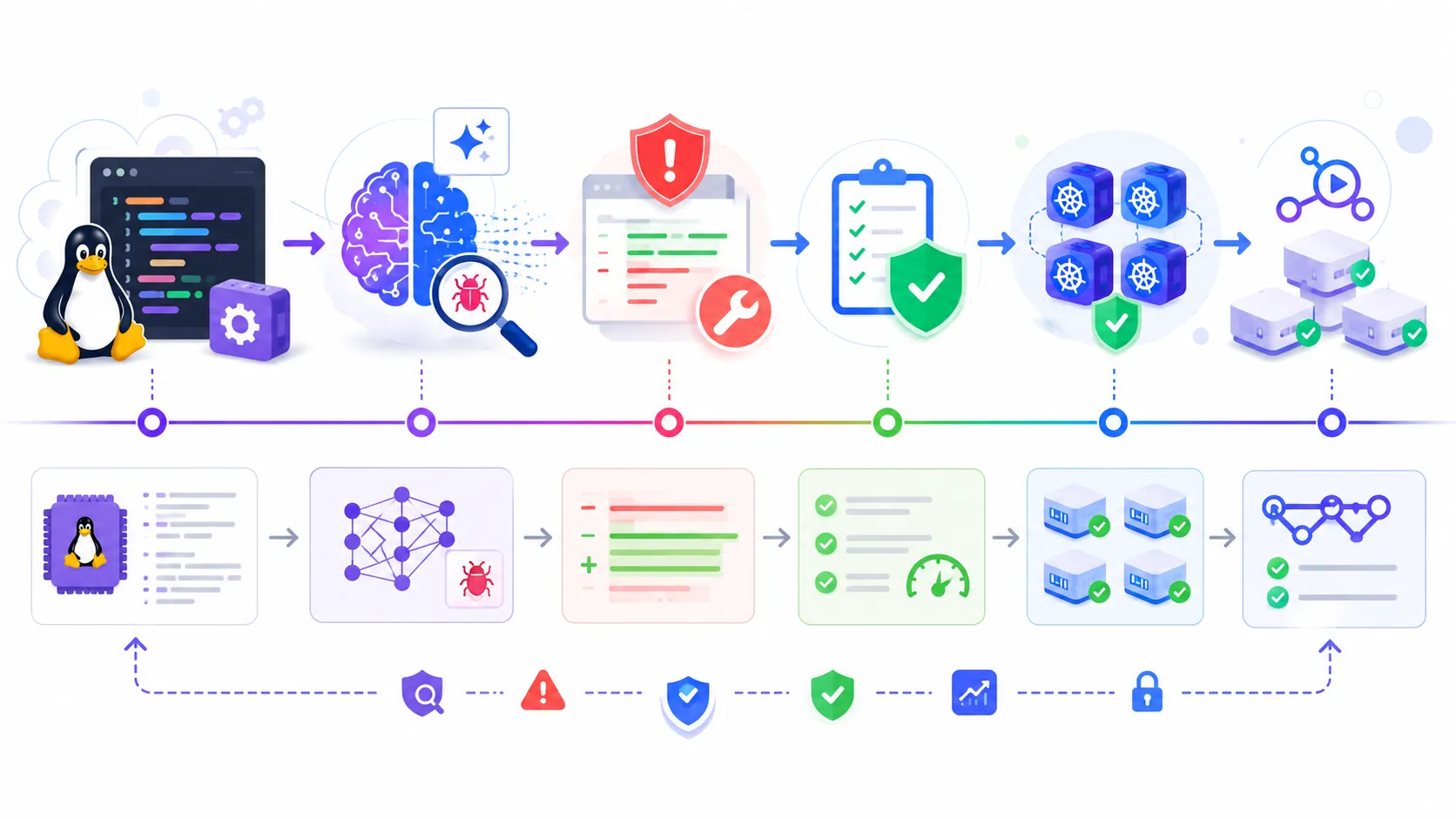
The Real Shift Is Operational
AI did not remove judgment
The dumb version of this story is “AI found root in Linux, humans are obsolete.” I do not buy that.
What happened is more interesting. A researcher understood a subtle attack surface. An AI-assisted system helped search a large, old, complicated subsystem. The disclosure then moved through the messy real world of vendors, trackers, public PoCs, social media, government catalogs, and exhausted engineers trying to decide what needs paging right now.
That last mile is still human work. Someone has to decide whether a runner is exposed. Someone has to know which clusters run untrusted jobs. Someone has to understand whether a mitigation breaks IPsec or a compliance dependency. Someone has to explain to product teams why a kernel patch matters to a SaaS feature launch.
So no, Copy Fail does not make security teams obsolete. It makes slow security teams uncomfortable.
The new baseline is faster validation
My takeaway is pretty blunt: if AI-assisted vulnerability discovery is becoming normal, then AI-assisted validation and response need to become normal too.
Not in the “let an agent patch prod without review” sense. Please do not. I mean boring automation: asset inventory, kernel version mapping, advisory correlation, exploit precondition checks, runner isolation labels, patch rollout tracking, and post-mitigation verification. The things nobody wants to do manually during a noisy disclosure window.
Copy Fail will fade from the news cycle. The pattern will not. More serious bugs will arrive with messy AI-flavored disclosure, fast PoC cloning, and uneven vendor status. The teams that handle this well will not be the ones with the best hot take. They will be the ones that can answer, quickly and defensibly, “Where are we exposed, what boundary can break, and what did we already fix?”