



Google Antigravity 2 is the first Google I/O developer announcement this week that made me stop thinking about model rankings and start thinking about where the agent actually lives.
Not because Google shipped another coding model. Everyone is shipping another coding model. The more interesting part is that Google is bundling Gemini 3.5 Flash, a standalone Antigravity desktop app, a CLI, an SDK, and managed agent infrastructure into one developer surface.
That sounds like a product keynote sentence. I know. But under the marketing layer, there is a real shift here: Google is trying to move AI coding away from “chat beside my editor” and toward “agents that can run as a local workflow, a terminal workflow, or an API workflow.”
That is a much bigger claim than autocomplete.
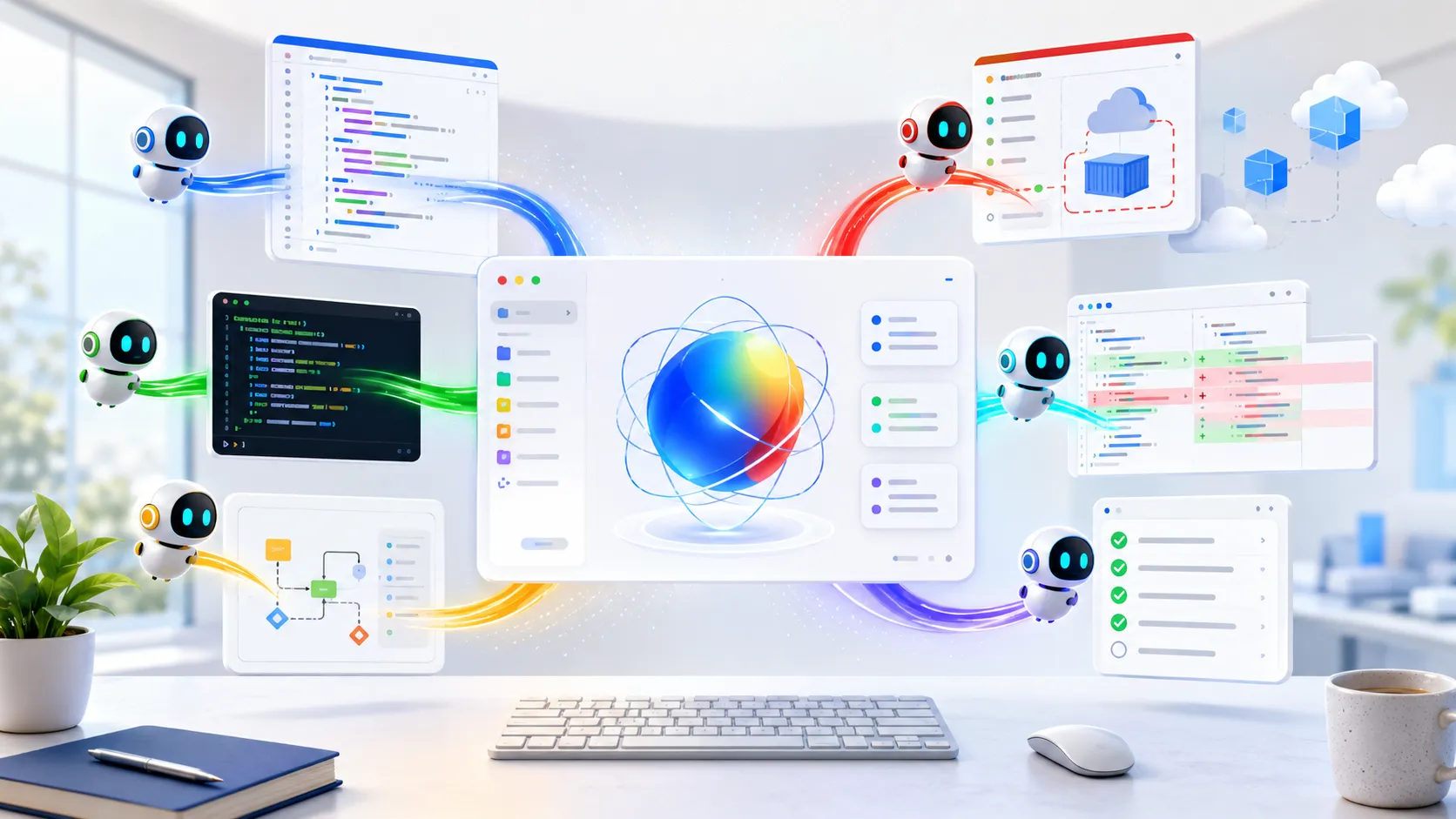
Google Antigravity 2 Is Really A Surface Strategy
The Desktop App Is The Loud Part
The official Google I/O developer highlights frame Antigravity 2.0 as the place where developers orchestrate multiple agents, create subagents, schedule background tasks, and connect work across AI Studio, Android, Firebase, and Google Cloud.
That is the part most people will screenshot.
It is also the least surprising part. Cursor, Claude Code, Codex, Windsurf, OpenCode, and half a dozen smaller tools already trained developers to expect an agent panel somewhere near their repo. A desktop app is table stakes now.
The sharper move is that Google is trying to make the desktop app only one door into the same agent harness.
The CLI And SDK Matter More Than The Window
TechCrunch’s I/O report called out the new CLI and SDK, and that is where my attention went immediately.
If Antigravity is only an IDE, it competes with every other IDE-shaped coding agent. Fine. That is a crowded knife fight.
If Antigravity is a reusable agent runtime with a desktop app, terminal surface, SDK, managed sandbox, and Google product integrations around it, then the game changes. The important question becomes: where can this agent be embedded?
Inside a local repo? Sure.
Inside AI Studio after a prototype is generated? That is more interesting.
Inside a CI-style review workflow? Maybe.
Inside Google Cloud with a managed environment and persistent state? Now we are not talking about a coding assistant anymore. We are talking about developer infrastructure.
Gemini 3.5 Flash Makes The Timing Spicy
Fast Models Change Agent Behavior
Google says Gemini 3.5 Flash is built for agentic workflows and coding. The Google Developers Blog recap says I/O 2026 moved from simple assistance toward agents that can navigate complex workflows across the stack.
That matches the broader direction we have been watching in posts like Codex Goals Turn AI Coding Into A Long Running Loop. The model is no longer just answering one prompt. It is staying attached to an objective, touching files, running tools, and asking for permission when the workflow hits a boundary.
Speed matters more in that world than it does in a chat demo.
When one assistant writes one function, latency is annoying. When ten subagents are searching, editing, testing, reviewing, and waiting on each other, latency becomes architecture. Every slow step multiplies. Every failed retry burns context, tokens, and patience.
That is why the Flash framing is clever. Google is not saying “our biggest model is smarter.” It is saying this model is fast enough to be the worker layer.
I Still Want The Receipts
TNW covered the I/O demo where agents reportedly built an operating system from scratch. Cybernews also described the keynote as a hard push into agentic AI, with Antigravity 2.0 sitting next to Gemini 3.5 Flash and Gemini Omni.
I enjoy a wild demo as much as anyone, but I do not ship production confidence from stage magic.
The real proof will be boring:
- Can the agent keep a repo plan stable after three hours?
- Can it avoid editing unrelated files?
- Can it explain why a test failed instead of just trying another patch?
- Can it preserve secrets, credentials, and local environment boundaries?
- Can teams inspect the sandbox and logs without becoming full-time agent babysitters?
That is the stuff I care about. Not because demos are fake, but because demos are optimized for narrative. Real repos are optimized for pain.
The Developer Risk Is Losing The Review Layer
The Scary Part Is Not That Agents Write Code
The scary part is that agents are getting enough product surface to make bad decisions look official.
A desktop app feels official. A managed agent API feels official. A Google Cloud integration feels official. A CLI with an SDK feels official. Once a tool has that much ceremony around it, teams start treating the workflow as safer than it actually is.
That is how sloppy automation sneaks in.
Not through one dramatic failure. Through a thousand small approvals where nobody reads the diff carefully because the agent already ran tests and the UI looked confident.
The practical response is not “do not use it.” That is lazy. The practical response is to move the review layer closer to the agent loop.
Here is the kind of check I want around any Antigravity-style workflow before I let it touch something real:
git diff --name-only
git diff --stat
npm test
npm run lint
git grep -n "API_KEY\\|SECRET\\|TOKEN" -- .
Nothing fancy. Just make the agent prove the blast radius before I start trusting the output.
Local Agent Workflows Need Local Policy
This is where Antigravity could become genuinely useful if Google gets the defaults right.
The Google Developers Blog mentions terminal sandboxing, credential masking, and hardened Git policies in the developer keynote recap. That is exactly the direction these tools need to go. Agentic coding does not become professional because the model is stronger. It becomes professional when the harness makes unsafe behavior awkward.
I want agents that can move fast inside a narrow lane.
I want repo-level policies.
I want obvious permission boundaries.
I want a boring audit trail that tells me which agent changed which file and why.
And yeah, I want the CLI to work without forcing every serious workflow through a pretty UI.
Why This Feels Bigger Than Another Coding Assistant
Google Is Connecting The Whole Funnel
The part I keep coming back to is the funnel.
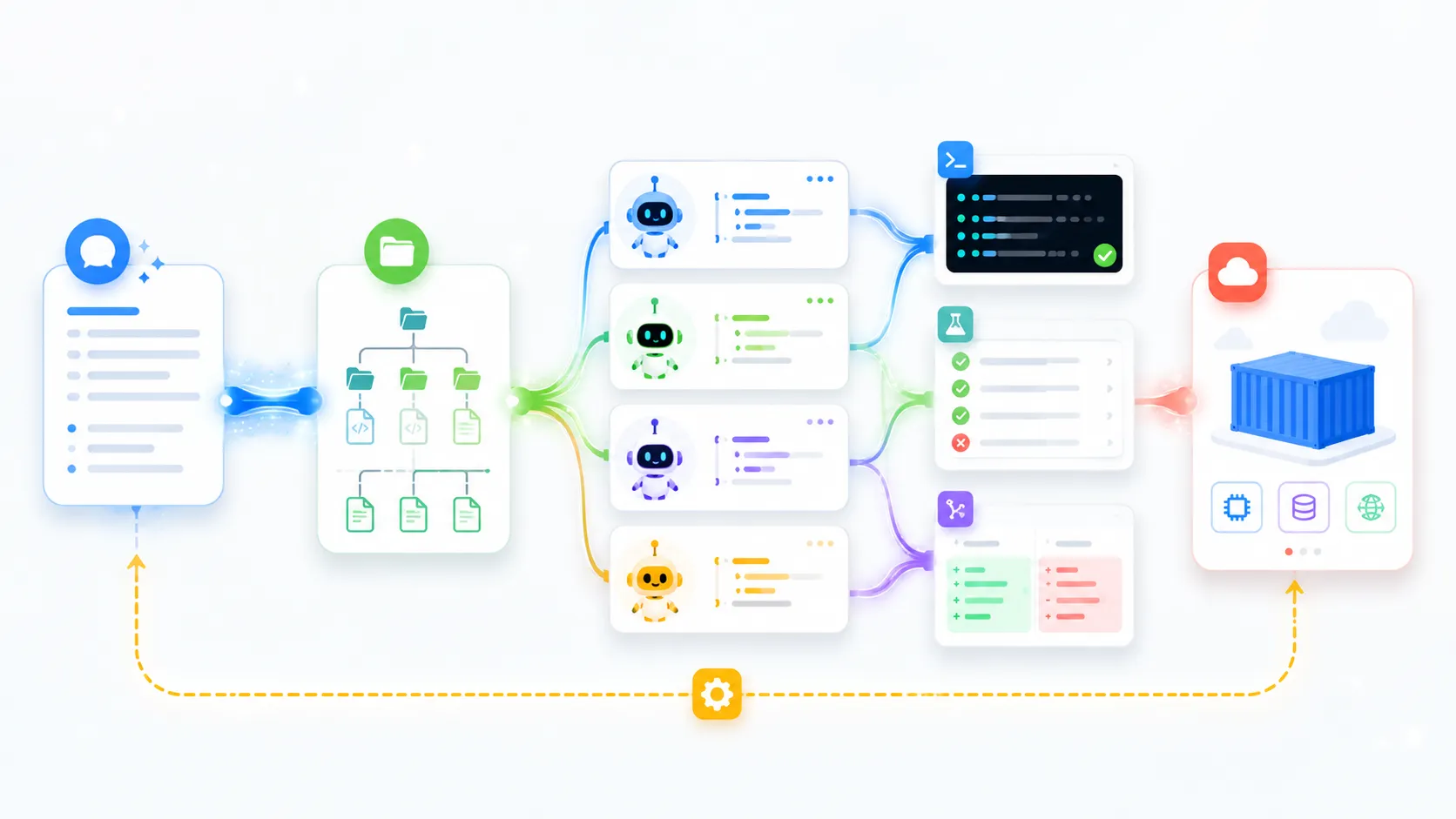
Google AI Studio can generate a project. Antigravity can pull it into local development. Gemini 3.5 Flash can power the agents. Managed Agents in the Gemini API can run stateful work in isolated Linux environments. Android and Firebase integrations give the agent somewhere useful to deploy or test.
That is not one feature. That is a pipeline.
And pipelines are where developer habits change.
If the flow from prompt to prototype to local repo to managed agent to deployed app gets smooth enough, Google does not need every developer to switch editors overnight. It just needs a chunk of new projects to start inside its agent-shaped path.
That is why this announcement feels more important than the raw model news. Models are interchangeable until the workflow around them becomes sticky.
The Cursor And Codex Pressure Is Obvious
This is also a very direct answer to the rest of the market.
OpenAI is pushing Codex across web, mobile, and longer-running goals. Anthropic is making Claude Code feel more like a software engineering environment than a chat feature. Cursor still owns a lot of developer mindshare because it made AI coding feel native early.
Google’s angle is different. It has Android, Chrome, Firebase, AI Studio, Gemini API, Workspace, Cloud, and Search. If Antigravity becomes the agent layer across those surfaces, the competition is not only about who writes the best patch. It is about who controls the path from idea to running software.
That is the real story.
Not “Google made another coding tool.”
More like: Google is trying to make AI coding a full-stack operating layer for its developer ecosystem.
What I Am Watching Next
The Benchmarks Are Less Interesting Than The Failure Modes
I will try Antigravity 2 when the CLI and SDK are available in a way that fits my normal repo workflow. But I already know what I am going to test first.
Not the prettiest demo.
The annoying stuff.
Can it recover after a bad migration? Can it stop when tests reveal the plan is wrong? Can it work with existing project conventions instead of flattening everything into its favorite pattern? Can it explain a security-sensitive change without hand-waving?
That is where agent tools win or lose with developers who have to maintain the code after the keynote ends.
Google Antigravity 2 has the right shape for the next phase of AI coding: desktop when you want visibility, CLI when you want speed, SDK when you want integration, and managed agents when you want infrastructure handled.
Now it has to earn trust in the boring places.
That is the only benchmark I care about after the caffeine wears off.