



Codex mobile is the kind of developer feature that sounds silly for about five seconds.
Then you remember how much agent work now happens while you are waiting. Waiting for tests. Waiting for a refactor. Waiting for a branch to stop being haunted by some boring integration failure. OpenAI’s new Codex in the ChatGPT mobile app is basically a remote control for that waiting.
And honestly? That is more interesting than another benchmark post.
Codex Mobile Is Not About Coding On A Tiny Keyboard
The phone is a control surface
The useful mental model is not “write code on your phone.” Please no.
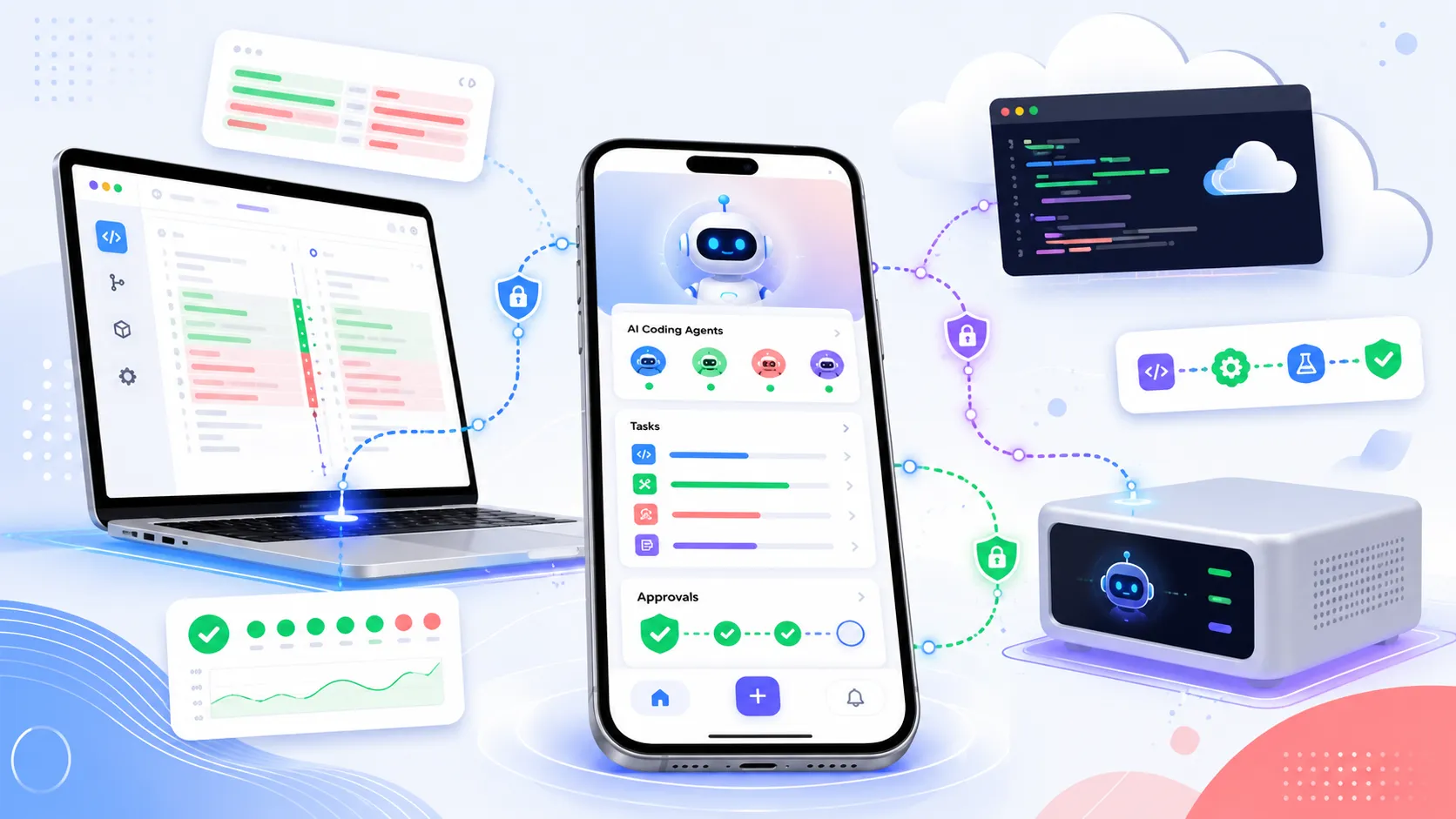
The useful mental model is “keep long-running agent work alive when your laptop is not the only screen in your life.” OpenAI says Codex in ChatGPT mobile can show active threads, approvals, plugins, project context, diffs, terminal output, screenshots, and test results from the machine where Codex is actually running. That machine can be a laptop, a Mac mini, a devbox, or a managed remote environment.
That is a real shift. Not because it makes mobile development glamorous. It does not. It makes mobile development less absurd by avoiding the part where your phone pretends to be a full IDE.
The phone becomes the place where you say yes, no, try the other plan, rerun the failing test, or stop touching that file. That is a much smaller job than coding. It is also exactly the job that blocks agents all the time.
Axios had the right “reality check” angle here: approving agent work from a small screen can create risk when people are distracted. I agree with that. I also think the risk is not new. Developers already approve CI retries, deploys, access requests, incident actions, and Slack decisions from phones. Codex mobile just pulls AI coding agents into the same messy mobile approval culture.
The interesting feature is continuity
OpenAI says more than 4 million people now use Codex every week. TechRadar also pointed out the jump from 3 million to 4 million weekly users in a little over a month. That is the part that makes this feel less like a convenience feature and more like a workflow bet.
If millions of developers are already letting agents run in the background, the next pain is not “can the model edit a file?” The next pain is handoff. The agent gets stuck. It needs permission. It asks which approach to take. It produces a diff while you are between meetings. It finds a second bug while you are away from the desk.
The old flow is awkward. You either stay glued to the terminal, or you come back later and discover the agent waited 47 minutes for a yes-or-no answer.
Codex mobile attacks that dead time.
That does not mean every dead minute should be filled. I do not want a world where every walk becomes a code review. But as a tool shape, this is obvious in hindsight. Agents stretch work across time. Phones are where fragmented time already lives. Put the decision point where the developer actually is.
The Approval Problem Gets Sharper
A small screen hides a lot of blast radius
Here is the thing nobody should hand-wave away: approving a coding agent is not the same as approving a calendar invite.
An agent can run commands. It can edit files. It can touch migrations. It can update tests in ways that make bad behavior look green. It can misunderstand a repo boundary and still produce a diff that looks clean in a preview. The whole point of agentic coding is that it does more than autocomplete. That means the approval surface is heavier than a normal mobile notification.
So I would treat Codex mobile as a forcing function for better permissions.
Not vibes. Actual permissions.
If a mobile approval can let an agent run npm test, fine. If it can let an agent apply a generated patch to a docs page, probably fine. If it can let an agent edit auth code, run a destructive database command, or push to a protected branch, the system should slow down hard.
Try sketching the policy like this:
read-only repo inspection        mobile approval is okay
test and lint commands           mobile approval is okay with visible command text
small docs or fixture edits      mobile approval is okay with diff preview
source edits in critical paths   desktop review required
schema or migration changes      desktop review plus local verification required
deploy or credential actions     never approve casually from mobile
That is not because phones are bad. It is because context is compressed. You see less code, fewer surrounding files, fewer warnings, and less of your own attention span.
The secure relay detail matters
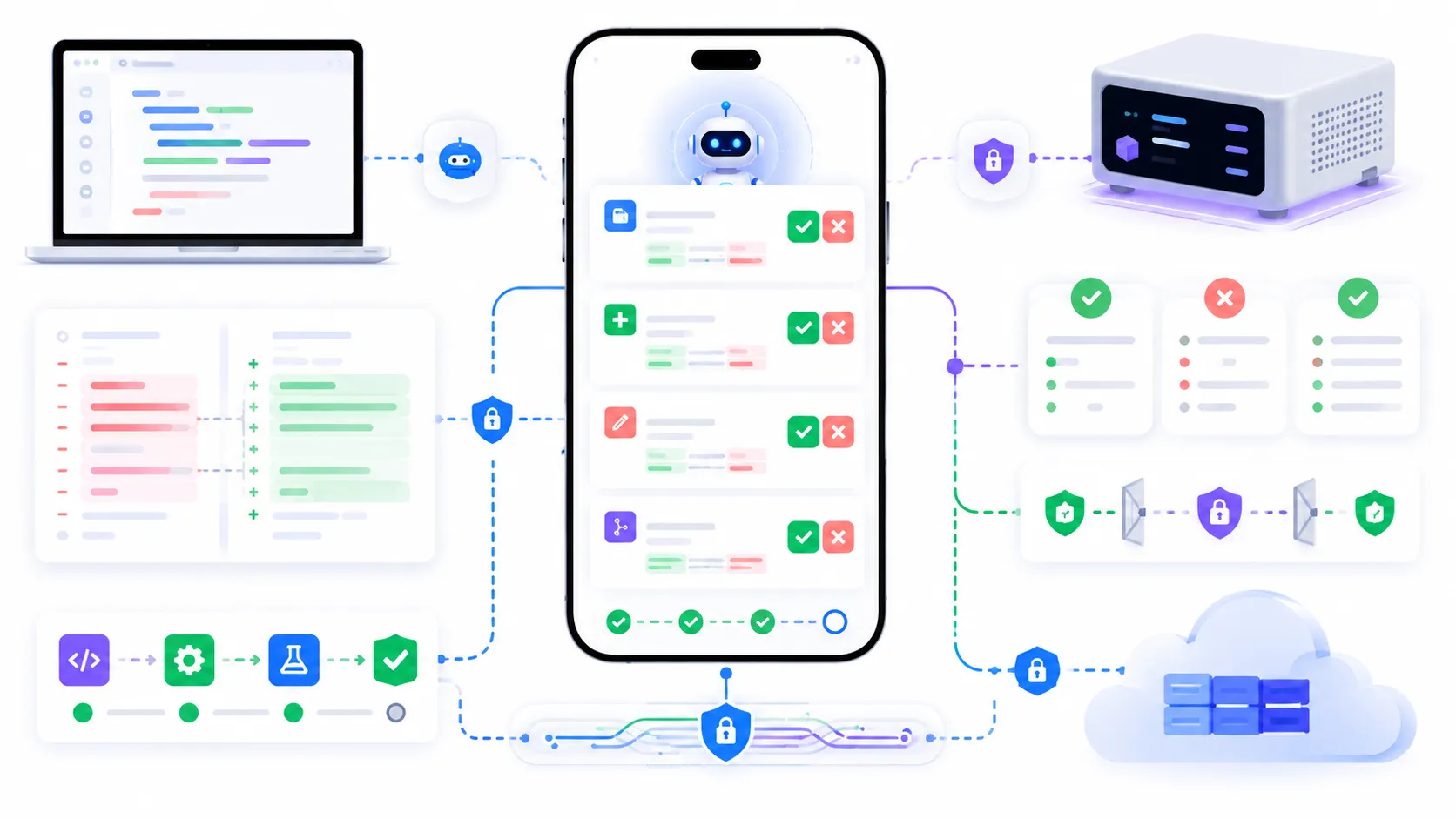
OpenAI says Codex uses a secure relay layer so trusted machines stay reachable across devices without being exposed directly to the public internet. That detail matters more than the product screenshots.
If this were just “open a tunnel to your laptop and hope,” I would be out. Developer machines are full of source code, credentials, SSH configs, cached package tokens, private docs, and weird one-off scripts nobody remembers installing. Remote agent control cannot be treated like a cute sync feature.
The relay model is the right direction because the phone should not become a public doorway into your dev environment. The machine running Codex should keep the files, credentials, permissions, and local setup. The phone should carry state and decisions, not become the new place where secrets live.
Gadgets360 noted that the mobile app works as an extension of the desktop app rather than an independent coding environment. That limitation is annoying if you wanted magic. It is reassuring if you care about blast radius.
This Fits The Larger Agent Remote Control Race
OpenAI is chasing the workflow, not just the model
The timing is not subtle.
OpenAI shipped Codex mobile right as the AI coding agent market is turning into a distribution fight. Anthropic has Claude Code remote control sessions. xAI launched Grok Build, a terminal coding agent for SuperGrok Heavy subscribers, with plan mode, diffs, AGENTS.md support, plugins, hooks, skills, MCP servers, and parallel subagents. UiPath is wiring enterprise automation around coding agents. GitHub trend pages are full of agent tooling, code search, skills, and local agent frameworks.
The model still matters. Of course it does.
But the product fight is moving up a layer. Who owns the developer’s active work? Who owns approvals? Who owns the machine connection? Who owns the repo context? Who owns the policy layer when an agent wants to do something risky?
That is why mobile Codex is worth watching. It is not just a feature inside ChatGPT. It is OpenAI making Codex feel less like a tool you open and more like a background worker you supervise.
I wrote something similar in the recent Claude Code large repo post: the harness is becoming the product. Codex mobile is another example. The chat model is not the whole experience. The useful product is the relay, permissions, host connection, active thread state, command approval, diff review, hooks, and verification loop around the model.
The free tier rollout is a land grab
OpenAI says Codex mobile is rolling out in preview across all plans, including Free and Go, in supported regions. That matters.
Putting the remote control into the existing ChatGPT app lowers the friction a lot. No separate mobile app. No “developer-only” island. Just update ChatGPT and connect the desktop Codex app on macOS, with Windows support coming later.
That is smart distribution.
It also makes the competitive pressure nastier. Axios connected the rollout to OpenAI offering two months of free Codex usage for companies switching over. Whether or not that changes your team’s tool choice, it tells you where the market is. AI coding agents are no longer being sold as clever autocomplete. They are being sold as operational capacity.
That is a very different pitch.
Autocomplete helps a developer type faster. An agent that can keep working while you commute, run tests on a devbox, ask for approval, and send back a diff is closer to elastic labor. You can dislike that framing. I kind of do. But that is the shape vendors are pushing toward.
How I Would Use It Without Regretting It
Keep mobile approvals boring
My personal rule would be simple: use Codex mobile for steering, not for final trust.
Great mobile actions:
- Start a bug investigation while the context is fresh.
- Approve a read-only command.
- Choose between two implementation plans.
- Ask for a smaller diff.
- Tell the agent to add a test it forgot.
- Stop a task before it burns more time.
Bad mobile actions:
- Approve a migration after glancing at three lines.
- Accept a security-sensitive diff because the summary sounds confident.
- Merge from a phone because CI is green.
- Let an agent run commands you cannot read fully.
- Review generated tests without checking what behavior they actually protect.
The distinction is not anti-agent. It is pro-sanity.
Agents are useful when they reduce mechanical waiting. They are dangerous when they turn human judgment into a notification tap.
Teams need a mobile agent policy now
If your team is serious about AI coding agents, write the policy before everyone improvises one in Slack.
It does not need to be a huge document. One page is enough. Which commands can be approved from mobile? Which directories require desktop review? Which tasks need a second human? Which actions are always blocked? What gets logged? Where do screenshots and terminal output go? How do you revoke a connected host? What happens when a phone is lost?
That sounds boring because it is. It is also the kind of boring that prevents a hilarious incident report from becoming your Friday night.
I would also wire hooks around this. If Codex Hooks are generally available, use them. Scan prompts for secrets. Block dangerous commands. Require local test commands before source edits leave the branch. Log approvals. Make mobile review safer by making the system less dependent on perfect human attention.
The best mobile approval is the one where the risky path never shows up as a casual button.
The Desk Is Not Dead But The Loop Is Changing
This is probably how agent work feels normal
I do not think Codex mobile means developers are about to abandon desks. Real review still wants a full screen. Real debugging still wants logs, files, terminals, and enough mental space to build a model of what is happening.
But I do think this makes AI coding agents feel more normal.
The weird part of agentic coding has never been that the model can edit code. We got used to that quickly. The weird part is that the work has a lifecycle. It starts, pauses, asks, runs, fails, retries, produces artifacts, and waits for judgment. That lifecycle does not fit neatly inside a single terminal session.
Codex mobile is OpenAI admitting that agent work leaks into the rest of the day.
That is useful. It is also a little uncomfortable.
My bet is that the teams who get value here will not be the ones approving everything from the train. They will be the ones who split work clearly: mobile for steering, desktop for trust, automation for guardrails, CI for evidence, and humans for the decisions that actually deserve a human.
Codex mobile makes desk coding feel optional for some parts of the loop.
For the important parts, the desk is still where I want both eyes open.